
- NEARLY 30% LEAP IN RESOLUTION — Experience every thrill in breathtaking detail with sharp graphics and stunning 4K Infin…
- NO WIRES, MORE FUN — Break free from cords. Play, explore and exercise in immersive worlds — untethered and without limi…
- 2X GRAPHICAL PROCESSING POWER — Enjoy lightning-fast load times and next-gen graphics for smooth gaming powered by the S…
The offline AI transcription app landscape is evolving rapidly, with new entrants promising powerful, private, and polished text transcription without reliance on internet connectivity. Among these, Gemma AI has recently emerged as a noteworthy player, claiming to offer advanced offline transcription capabilities that address growing concerns around privacy and transcription accuracy.
Offline AI transcription apps allow users to convert speech to text directly on their devices, eliminating the need to send sensitive audio data to cloud servers. This is crucial for users who prioritize data privacy and demand compliance with strict security standards. According to an analysis of privacy-friendly AI tools, this shift toward on-device processing is increasingly favored by professionals handling confidential information or working in areas with limited internet access (Christopher Penn’s guide on privacy-friendly AI transcription).
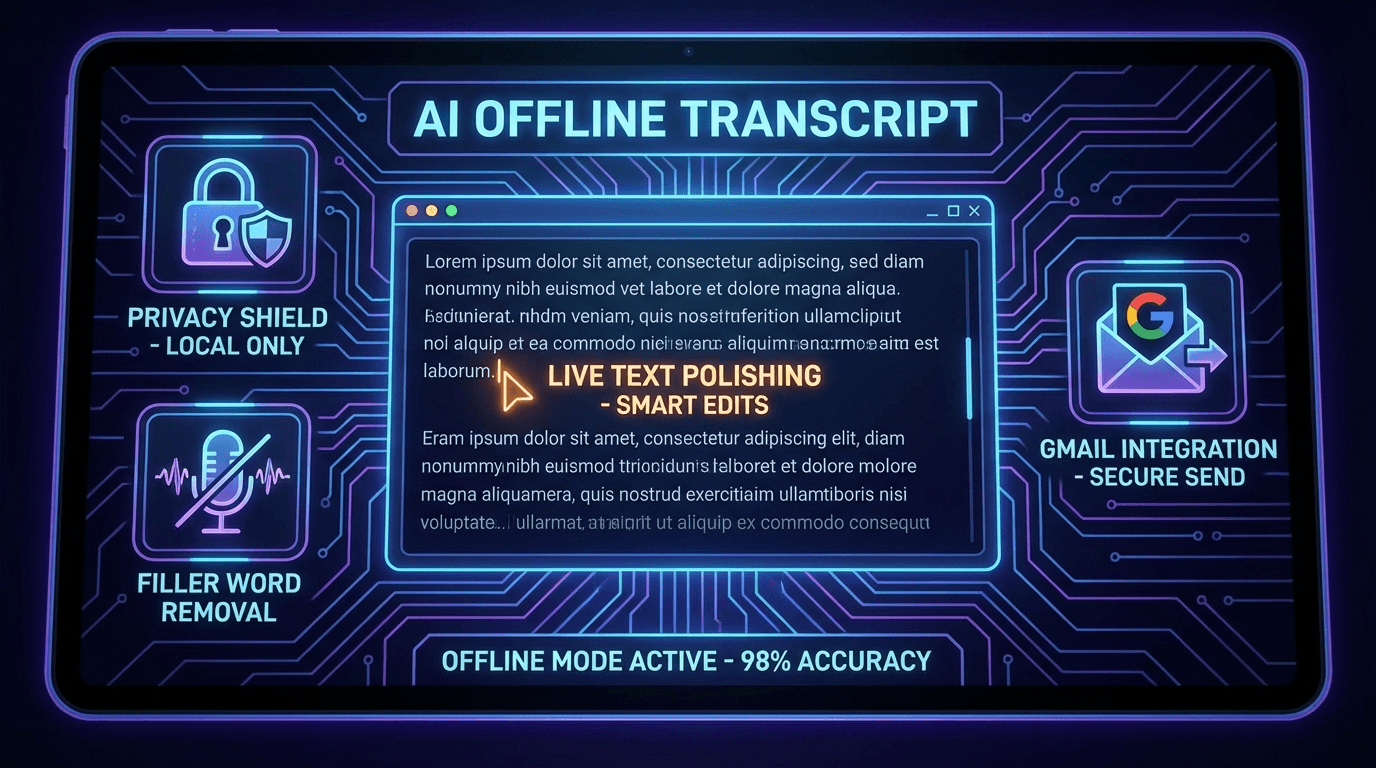
Gemma AI stands out by integrating the popular Whisper technology, a powerful machine learning model developed by OpenAI, directly within its offline engine. Whisper’s capabilities in accurately capturing nuances in speech have been well received, and embedding it in an offline context offers distinct advantages over cloud-dependent competitors. This approach enables real-time transcription and AI-powered editing features such as filler word removal and text polishing without internet disruption.
Compared to widely known apps like Otter.ai and Fireflies.ai, which primarily rely on cloud computing and require consistent internet access, Gemma AI’s offline functionality caters to a niche yet growing audience. Users in legal, medical, and corporate sectors often seek the best offline speech to text solutions to maintain strict control over their data and reduce latency in transcription workflows. Moreover, Gemma AI includes seamless integration with productivity tools, such as Gmail, allowing users to compose or review emails with voice input securely offline (Mailbird’s exploration of Gmail AI and privacy alternatives).
Privacy concerns in AI transcription tools go beyond connectivity; they extend to data storage, usage policies, and potential ethical pitfalls. Industry experts warn that cloud-based transcription apps risk exposing sensitive information through data breaches or inappropriate data sharing (Duane Morris on AI transcription privacy and ethical risks). Offline AI transcription apps mitigate such risks by minimizing data transfer and granting users greater transparency and ownership over their transcripts.
Understanding the user scenarios accentuates the value of offline capabilities. For example, journalists working in remote locations, business professionals engaged in confidential meetings, or users in jurisdictions with strict data protection regulations can benefit significantly from the offline AI transcription app. On-device dictation software removes the friction of connectivity issues and enhances reliability, ensuring uninterrupted access to transcription services.
The Benefits of Using an Offline AI Transcription App
Gemma AI is also making strides in cross-platform availability. Alongside iOS, its Android app is in development, aiming to become the best offline voice to text option for smartphone users who prefer or require local processing instead of relying on cloud solutions. This synchronized development highlights the growing demand for advanced offline transcription apps that match or exceed the performance of online alternatives.
Pricing models for offline AI transcription apps vary widely. Some apps offer subscription-based plans with tiered access to features like live transcription, AI edits, and integration options. Gemma AI reportedly plans to offer flexible pricing to accommodate individual professionals and larger enterprises, although final details are pending further user testing. This approach recognizes the spectrum of users from casual to power users seeking polished, reliable transcription solutions.
In the broader competitive landscape, potential users benefit from evaluating features such as transcription accuracy, offline functionality, integration capabilities, and user interface design. While Gemma AI appears poised to capture attention with its offline prowess, apps like Otter.ai remain dominant for cloud-first workflows. The choice depends on specific user needs, balancing privacy, convenience, and advanced AI features.
For those interested in the market trends driving investment and innovation in AI-powered transcription and privacy technologies, the recent analysis by Techryza offers valuable insights into private markets and startup strategies shaping this space (investor trends in AI and privacy technology).
The emergence of Gemma AI and similar offline AI transcription apps marks a meaningful step toward empowering users with more control over their data and improving transcription accuracy without the drawbacks of internet dependency. As these apps mature, users can expect continued enhancements in voice recognition, natural language processing, and seamless integrations with everyday workflows, setting new standards for privacy-conscious, AI-powered dictation software.

- AN AMAZING MAC AT A SURPRISING PRICE — With an incredibly portable and durable aluminum design, up to 16 hours of batter…
- FOUR STUNNING COLORS. ONE DURABLE DESIGN — Choose from four beautiful colors — Silver, Blush, Citrus, or Indigo — each w…
- FLY THROUGH EVERYDAY ASSIGNMENTS — Whether you’re cramming for finals, using Apple Intelligence* to summarize class note…