
- NEARLY 30% LEAP IN RESOLUTION — Experience every thrill in breathtaking detail with sharp graphics and stunning 4K Infin…
- NO WIRES, MORE FUN — Break free from cords. Play, explore and exercise in immersive worlds — untethered and without limi…
- 2X GRAPHICAL PROCESSING POWER — Enjoy lightning-fast load times and next-gen graphics for smooth gaming powered by the S…
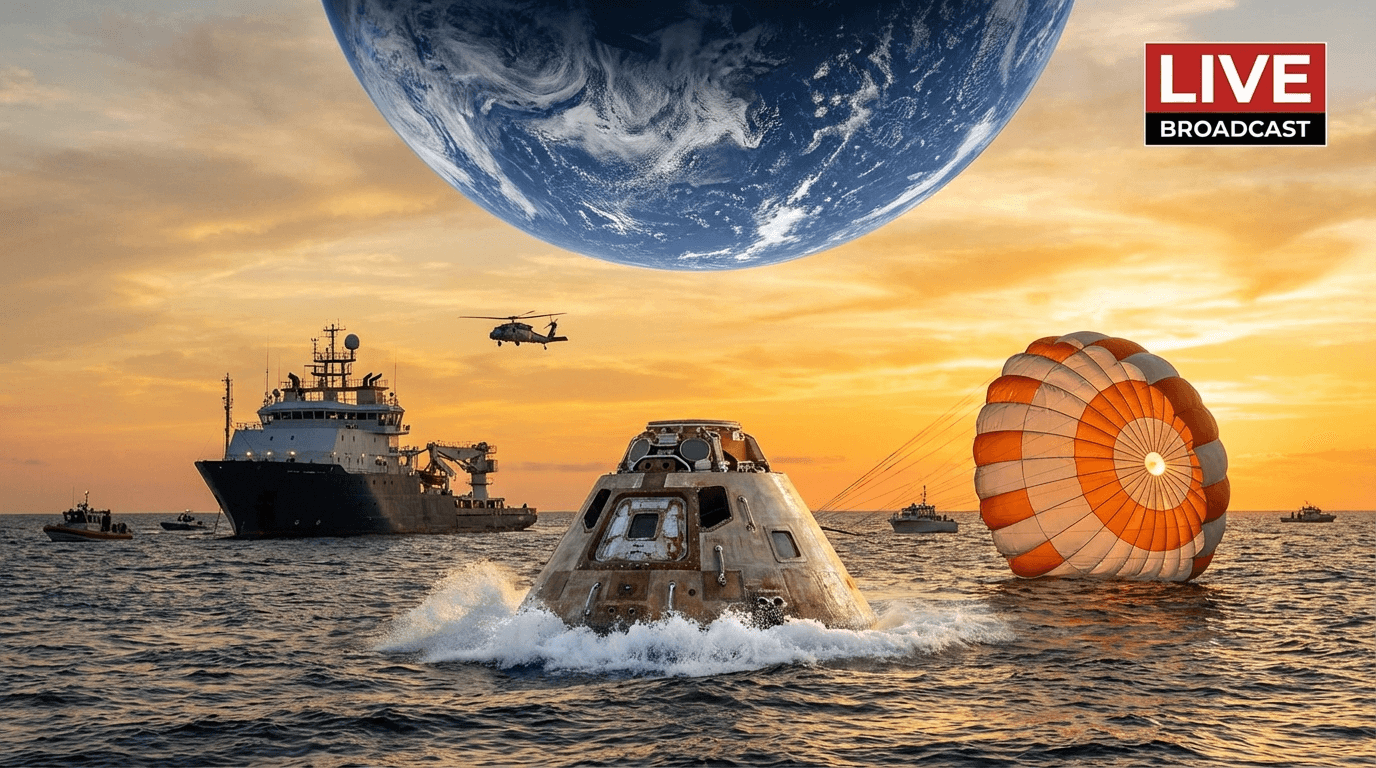
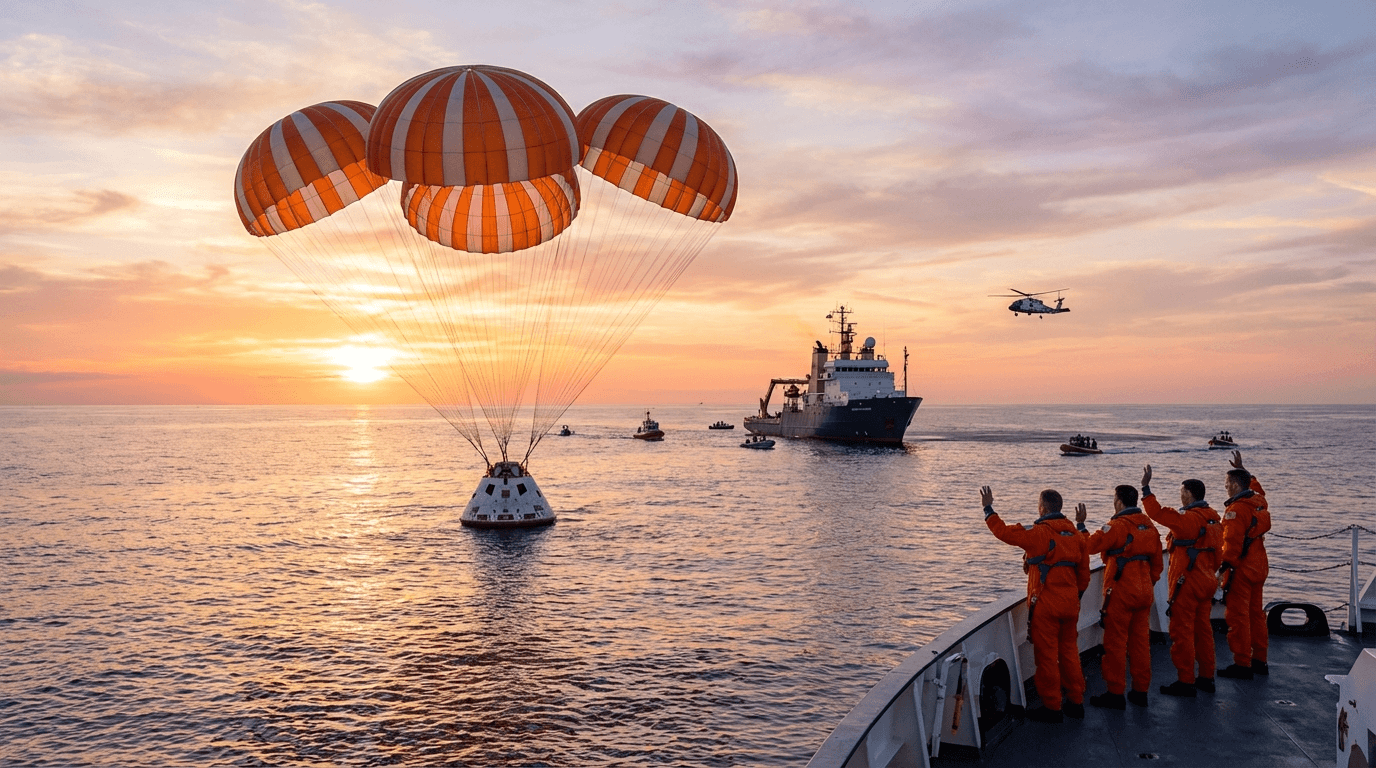
The Artemis II splashdown marked a critical milestone in NASA’s quest to return humanity to the Moon, culminating with a pinpoint Pacific Ocean landing that ensured the safety of the crew and the Orion spacecraft. This successful event not only demonstrated the precision of the re-entry and recovery systems but also set a new standard for crewed lunar mission conclusions.
Artemis II Pacific Splashdown: A Perfect Landing
The mission’s final moments encapsulated the intense engineering and operational choreography required for a safe return from deep space. After completing the historic first crewed lunar flyby since Artemis I, the Orion capsule underwent a carefully programmed series of re-entry burns to slow its velocity from lunar escape speeds. These maneuvers were crucial in setting the correct trajectory for the Orion capsule recovery, targeting a splashdown in the Pacific Ocean with remarkable accuracy.
Upon entering Earth’s atmosphere, the spacecraft confronted extreme conditions including intense heat and friction, necessitating the performance of a reinforced heat shield. As the capsule descended, a sequence of parachutes deployed to reduce speed further, culminating in a “perfect bullseye splashdown,” a phrase coined to describe the exceptionally accurate landing within the designated recovery zone. Observers noted the low G-forces experienced by the astronauts, an engineering achievement that balanced deceleration with crew comfort and safety.
Significantly, NASA engineers monitored astronaut vital signs to confirm the Artemis II crew condition remained stable throughout re-entry and splashdown. This aspect underlined the mission’s emphasis on human factors, ensuring that the crew, including commander Reid Wiseman and pilot Victor Glover, returned home without injury. The mission also dealt effectively with the plasma blackout phase, a communication challenge during atmospheric re-entry when ionized gases surround the spacecraft.
This successful splashdown follows the precedent set by Artemis I but distinguishes itself by carrying astronauts aboard, thereby stress-testing mission protocols in a live environment. The spacecraft’s heat shield and parachute system featured improvements that responded to data collected from earlier missions, showcasing NASA’s incremental advancements in spacecraft design and mission safety.
Beyond technical triumphs, the operation involved meticulous environmental monitoring to minimize the ecological impact of recovery. Coordination among international and federal partners ensured that recovery vessels and teams were positioned optimally, highlighting the collaborative nature of modern space exploration. This aspect of the mission reflected NASA’s commitment to responsible exploration practices.
For those interested in experiencing the event in detail, coverage of the Artemis II splashdown offers a vivid account, capturing the capsule’s final descent and ocean touchdown. Such visual resources help contextualize the complexity and success of the splashdown event for a wider audience.
As Artemis II closes, it sets a hopeful precedent for the forthcoming Artemis III mission, planned to return astronauts to the Moon’s surface. The lessons learned this mission — from precise trajectory planning to crew recovery and safety protocols — will underpin future lunar landings and long-duration human spaceflight. Artemis II’s success confirms the viability of NASA’s approach and reinforces the broader vision of sustained human exploration beyond low Earth orbit.
In sum, the Artemis II splashdown is more than a triumphant endpoint; it is a demonstration of integrated aerospace engineering, astronautical medicine, and international cooperation. It affirms the United States’ leadership in lunar exploration and lays foundational experience for more ambitious endeavors. The mission’s success will likely fuel renewed interest and investment in Artemis and related space programs, shaping the future of human presence in space.
Artemis II Pacific Splashdown: Global Impact and Future Outlook
The Artemis II Pacific splashdown not only demonstrated mission success but also reinforced confidence in Orion capsule recovery systems and astronaut safety protocols. Monitoring of the Artemis II crew condition throughout reentry provided valuable biomedical data that will inform future long-duration missions. As NASA continues refining its technologies, each successful Artemis II milestone contributes to a safer and more sustainable path toward deep space exploration, strengthening international partnerships and advancing humanity’s return to the Moon.

- AN AMAZING MAC AT A SURPRISING PRICE — With an incredibly portable and durable aluminum design, up to 16 hours of batter…
- FOUR STUNNING COLORS. ONE DURABLE DESIGN — Choose from four beautiful colors — Silver, Blush, Citrus, or Indigo — each w…
- FLY THROUGH EVERYDAY ASSIGNMENTS — Whether you’re cramming for finals, using Apple Intelligence* to summarize class note…