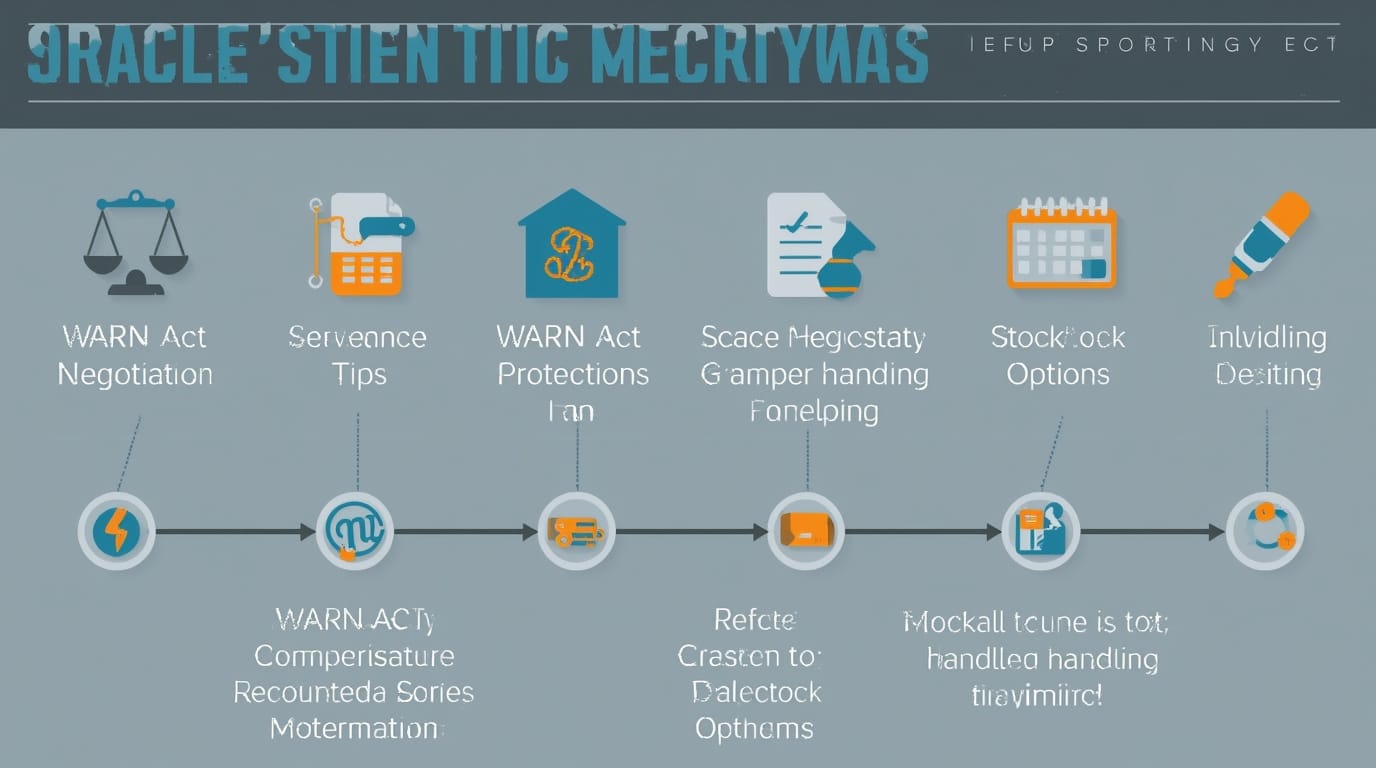

The recent wave of Oracle layoffs has abruptly impacted thousands of employees worldwide, spotlighting the complex issues surrounding Oracle layoffs severance. Understanding Oracle layoffs severance, the protections under the federal WARN Act, and the complications around stock compensation is critical for anyone affected. These stock-related concerns have become a major part of discussions around Oracle layoffs severance.
Table of Contents
Oracle Layoffs Severance and WARN Act Rights
Oracle’s workforce reductions occurred within a corporate structure that complicates the usual WARN Act notices. The Worker Adjustment and Retraining Notification (WARN) Act mandates employers to provide 60 days’ advance notice for large layoffs, aimed at giving workers time to prepare financially and seek alternative employment. However, the applicability of WARN can be less straightforward for multinational companies like Oracle, which operates various subsidiaries and regional offices. According to a recent investigation into Oracle’s Washington layoffs, there are ongoing questions about whether the notice timelines and notification requirements were fully met under state-specific implementation of the WARN Act (source).
Severance negotiations following Oracle layoffs often involve nuanced factors beyond the standard payout. Employees frequently seek clarity on the calculation basis for severance, including salary, tenure, and accrued benefits. Oracle’s severance packages reportedly vary depending on local labor laws and internal policies, creating disparities in outcomes. While severance offers are typically framed to include base salary continuation, many affected workers express confusion or dissatisfaction, particularly relating to bonuses and stock compensation vesting.
How Oracle Layoffs Severance Impacts Stock Compensation
A critical issue is how Oracle handles stock options during layoffs. Oracle employees often have a mix of vested and unvested stock awards and restricted stock units (RSUs). The distinction is key: vested stock options generally remain exercisable for a limited time after termination, whereas unvested shares usually are forfeited. The loss of expected stock compensation significantly impacts the total financial package for former employees. Some workers have reported receiving guidance about accelerating vesting deadlines or exercising options early, but these conditions depend heavily on Oracle’s severance terms and associated plan documents.
Best Strategies to Negotiate Oracle Layoffs Severance
Negotiating severance with Oracle can be challenging due to the company’s size and legal resources. Employees seeking to maximize their severance should carefully review their employment contracts, severance agreements, and stock plan terms. Engaging legal counsel knowledgeable about employment law, WARN Act nuances, and corporate severance norms is increasingly advised. Legal experts emphasize that negotiation can sometimes unlock enhanced severance or extended benefits if carefully broached. “Employees should document all communications and understand their rights under both federal and state laws,” notes employment attorney Stephanie Wallace, underscoring the importance of legal expertise in these cases (source).
Real-world experiences reveal that early and informed negotiation often yields better compensation or transitional support. Several Oracle former employees have shared their strategies online, highlighting the value of requesting detailed information breakdowns and pushing for customized severance terms when possible. Some have successfully negotiated continuation of health benefits or outplacement assistance, which can make a substantial difference during unemployment. However, outcomes vary widely depending on geographic location due to differing labor regulations.
For Oracle employees facing layoffs, interactive tools such as severance calculators can provide an initial estimate of expected compensation, factoring in salary, tenure, and bonus history. Also, staying informed on current litigation or class action suits against Oracle related to layoffs and severance might provide leverage or insight. Comprehensive resources combining legal frameworks, negotiation tips, and practical application are noticeably lacking but increasingly necessary.
Understanding the broader impact of these layoffs also requires looking at global labor law considerations. Oracle’s approach to layoffs, severance, and stock compensation contrasts with more employee-protective regulations in some countries. In the U.S., severance practices are largely discretionary in the absence of contract terms, yet WARN Act compliance is mandatory for mass layoffs. The intersection of these laws determines the baseline protections for Oracle workers and informs any negotiation strategy (source).
Bridging the gap between legal theory and employee realities, expert analyses encourage Oracle workers to document any WARN Act violations and consult labor professionals promptly. Combining this with proactive severance negotiation and an understanding of stock option impacts forms the best defense in uncertain layoffs. Exploring detailed guides to negotiate Oracle severance and protect WARN rights can empower displaced employees to secure fair compensation.
While some recent coverage has focused on Oracle’s technology pivots and funding expansions, the human cost of layoffs remains critical. Addressing employee concerns early through transparent severance dialogue mitigates reputational damage and legal risk. For those keen on understanding how these layoffs align with broader industry trends, the ongoing AI industry shifts and funding developments provide crucial context for Oracle’s corporate restructuring.
Navigating Oracle layoffs severance requires a multifaceted approach: knowing one’s WARN Act rights, leveraging legal expertise, assessing stock compensation nuances, and engaging in careful negotiation. As Oracle and other tech giants recalibrate workforce strategies, displaced employees must equip themselves with knowledge, tools, and professional guidance to protect their financial futures effectively.