
- NEARLY 30% LEAP IN RESOLUTION — Experience every thrill in breathtaking detail with sharp graphics and stunning 4K Infin…
- NO WIRES, MORE FUN — Break free from cords. Play, explore and exercise in immersive worlds — untethered and without limi…
- 2X GRAPHICAL PROCESSING POWER — Enjoy lightning-fast load times and next-gen graphics for smooth gaming powered by the S…
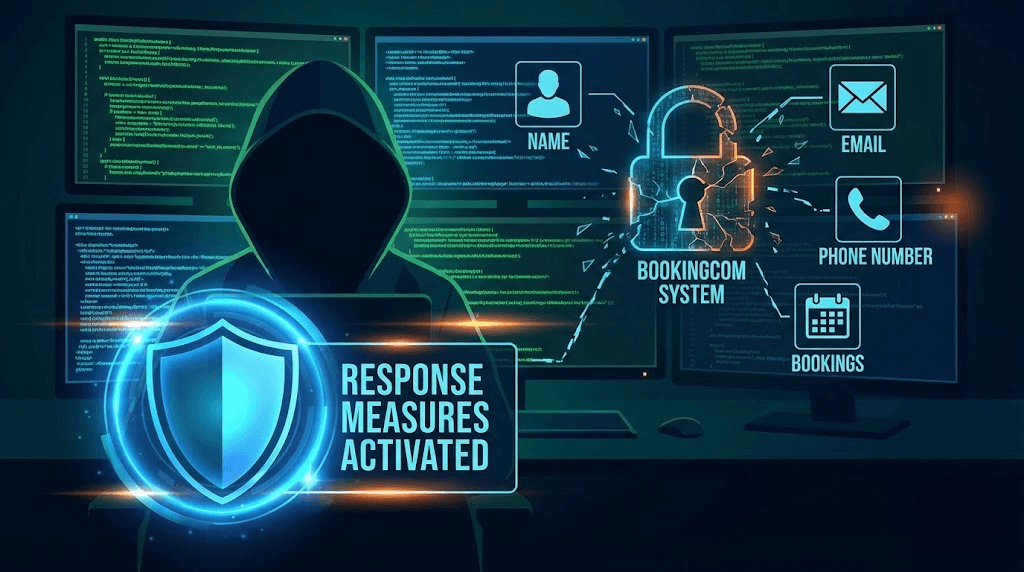
The Booking.com data breach has emerged as a significant travel security incident, exposing sensitive customer information and raising urgent concerns about data protection in the travel industry. This breach underscores the vulnerability of online booking platforms to sophisticated phishing attacks aimed at compromising user details.
Booking.com Data Breach: What Happened and Why It Matters
Details about the Booking.com data breach reveal that attackers leveraged targeted phishing campaigns to obtain access to customer information, including names, email addresses, and booking details. The timeline of the breach discovery indicates that security teams identified unusual activity in certain hotel partner accounts, which led to the detection of the unauthorized access. However, comprehensive public timelines remain limited, highlighting an area for greater transparency in future incident communications.
In this phishing campaign, attackers employed deceptive emails impersonating Booking.com or related partners, prompting victims to divulge credentials or click malicious links. According to detailed analysis by cybersecurity researchers, such as those featured in Sekoia’s phishing campaign report, the attackers used sophisticated social engineering to bypass typical email filters and security measures, making the threat particularly dangerous for unsuspecting travelers.
The data types compromised in this incident include:
– Customer full names
– Email addresses
– Booking dates and destinations
– Partial payment details linked to reservations
These details create a fertile ground for attackers to execute further phishing attempts or fraudulent activities using the stolen data.
Booking.com’s response to the breach has been proactive, involving immediate notifications to affected customers and coordination with cybersecurity authorities. The company emphasized its commitment to data security and urged users to be vigilant against unsolicited communications. Such response efforts align with best practices outlined by agencies like the Cybersecurity and Infrastructure Security Agency (CISA), which regularly publishes alerts and guidance on handling similar incidents.
To mitigate risks following this Booking.com data breach, users are advised to take several precautionary steps. Changing passwords on Booking.com and any reused credentials elsewhere is critical. Users should enable two-factor authentication where available and carefully scrutinize any requests for personal information or unusual activity on their accounts. Travelers are also recommended to monitor their payment methods for unauthorized charges.
This incident also serves as a reminder of the broader risks posed by phishing schemes targeting the travel sector. Similar campaigns have targeted major hotel chains and travel services, exploiting the high volume of transactions and personal data handled daily. Previous breaches and warnings about Iranian hacker groups targeting U.S. infrastructure, as analyzed in Techryza’s report on critical infrastructure threats, underscore the geopolitical dimensions that sometimes accompany such cyberattacks.
Moreover, the Booking.com breach highlights the importance of transparency in breach disclosures and the need for ongoing cybersecurity education for users. Legal repercussions for companies failing to protect customer data can be severe, particularly under regulations like GDPR and CCPA. Ensuring that companies maintain robust incident response plans and timely communication is essential to preserving customer trust and preventing further damage.
For travelers and Booking.com customers, vigilance remains the most effective defense. Recognizing phishing attempts through suspicious emails or texts and promptly reporting them can help curb the spread of these attacks. Experts recommend verifying links independently and using official apps or websites for all transactions to reduce exposure.
Security news outlet BleepingComputer has detailed the Booking.com hotel’s data exposure and the ongoing phishing campaign in their comprehensive coverage, which provides insight into the technical aspects and evolving threats faced by customers: Bleeping Computer’s booking.com phishing campaign analysis.
As customer data breaches continue to challenge trust in digital travel services, the Booking.com case exemplifies the urgent need for enhanced data security measures and informed user practices. This breach not only affects users directly but also sets a precedent for how travel platforms must manage and communicate about security incidents going forward.
In conclusion, the Booking.com data breach constitutes a critical wake-up call for all stakeholders in the travel industry. Users must adopt enhanced security habits, and companies must provide rapid, transparent responses to protect their customers. Such dual efforts are key to maintaining trust in digital travel ecosystems and safeguarding sensitive information against increasingly sophisticated cyber threats.

- AN AMAZING MAC AT A SURPRISING PRICE — With an incredibly portable and durable aluminum design, up to 16 hours of batter…
- FOUR STUNNING COLORS. ONE DURABLE DESIGN — Choose from four beautiful colors — Silver, Blush, Citrus, or Indigo — each w…
- FLY THROUGH EVERYDAY ASSIGNMENTS — Whether you’re cramming for finals, using Apple Intelligence* to summarize class note…