
- NEARLY 30% LEAP IN RESOLUTION — Experience every thrill in breathtaking detail with sharp graphics and stunning 4K Infin…
- NO WIRES, MORE FUN — Break free from cords. Play, explore and exercise in immersive worlds — untethered and without limi…
- 2X GRAPHICAL PROCESSING POWER — Enjoy lightning-fast load times and next-gen graphics for smooth gaming powered by the S…
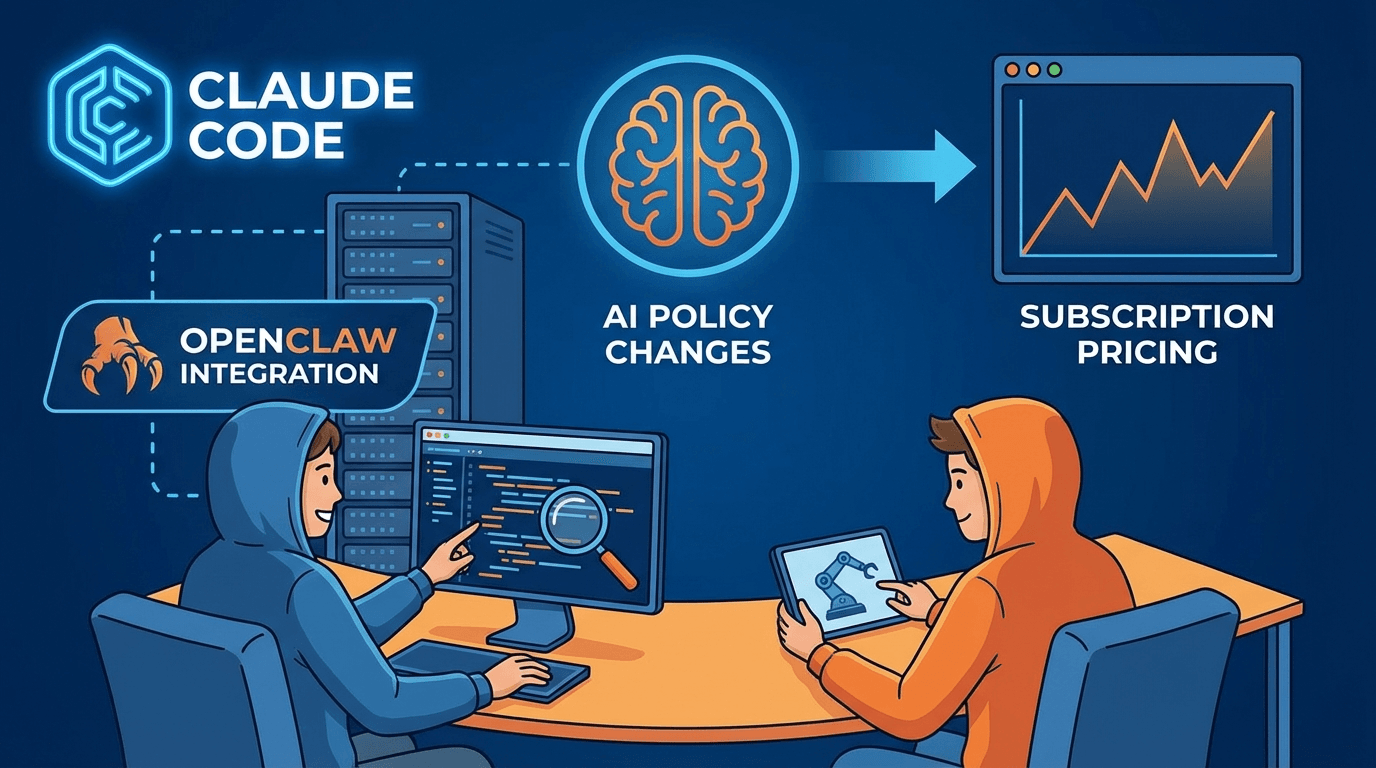
Anthropic’s recent update to its usage and subscription policy marks a significant shift in AI subscription pricing 2026, introducing nuanced complexity for developers and enterprises integrating Claude Code into their workflows. This adjustment not only redefines how users are billed but also elevates concerns around the cost and technical demands of third-party AI integration.
The revised policy alters traditional subscription models by focusing more heavily on usage metrics rather than flat seat fees, a change that directly influences the economics of deploying AI tools in production environments. Such a transition often requires engineering teams to revisit their implementation strategies to optimize cost-efficiency under the new payment structure. Claude Code, Anthropic’s developer-centric AI platform, exemplifies this shift by embedding integration costs into the subscription tiers, a departure from the historically predictable pricing models that many teams have relied on.
Understanding these subscription tiers and their implications is critical for organizations planning their AI technology budgets. According to Anthropic’s published pricing documentation, the new framework delineates clear thresholds based on usage that, when exceeded, render higher costs more immediate. This model incentivizes efficient code but also complicates forecast budgeting, particularly for startups and smaller teams whose usage patterns may fluctuate unpredictably.
This pricing evolution also has ripple effects on third-party AI tools such as OpenClaw, which rely on the Claude Code API for natural language processing capabilities. The cost implications extend beyond direct subscriptions to feature integration expenses and maintenance overhead. Developers must weigh these ongoing expenses against functionality gains, often prompting deeper technical evaluations and potential trade-offs in feature deployment.
Industry commentary, including analysis from financial analysts, suggests that while enterprise users might benefit from lowered seat fees, the overall total cost of ownership (TCO) could increase due to higher usage-based charges. This adds a layer of complexity to procurement decisions, urging IT leaders to engage more thoroughly with both the pricing nuances and the technical scalability of AI tools.
The impact on software engineering workflows is profound. Rather than a simple license purchase, DevOps and engineering teams must now factor in continuous monitoring and optimization to ensure compliance with cost thresholds. This could require enhanced integration of monitoring tools and real-time data analytics to manage subscription consumption effectively. The shift also challenges development cycles, as teams may need to re-engineer or limit AI calls within applications to control expenses.
For those considering broader AI adoption, understanding the multifaceted cost landscape is essential. Deep dives into AI subscription pricing 2026 offer insights into sector-wide shifts, highlighted by growing concerns about balancing innovation with financial sustainability. Reports on AI adoption statistics reveal trends towards increased AI tool complexity, reinforcing the need for clear cost management strategies.
In response, some developers and organizations are exploring alternative models, including hybrid subscription-payment structures or leveraging open-source AI frameworks to mitigate escalating expenses. Such approaches seek to maintain the advantages of integrated AI capabilities while controlling exposure to unpredictable costs tied to usage spikes.
Navigating the new landscape requires not only financial savvy but technical acumen to adapt code bases and integration points. The increase in complexity in AI subscription pricing 2026 ultimately prompts a holistic re-evaluation of how AI services are consumed, monitored, and scaled within business ecosystems.
The evolving Claude Code subscription policy reflects a broader industry trajectory towards more granular, usage-oriented billing. This shift represents a call for developers and enterprises alike to adopt more sophisticated frameworks for cost-benefit analysis, technical adaptation, and strategic planning. As AI becomes ever more integral to software products, comprehending these pricing dynamics will be key to maintaining competitive advantage and operational resilience.

- AN AMAZING MAC AT A SURPRISING PRICE — With an incredibly portable and durable aluminum design, up to 16 hours of batter…
- FOUR STUNNING COLORS. ONE DURABLE DESIGN — Choose from four beautiful colors — Silver, Blush, Citrus, or Indigo — each w…
- FLY THROUGH EVERYDAY ASSIGNMENTS — Whether you’re cramming for finals, using Apple Intelligence* to summarize class note…