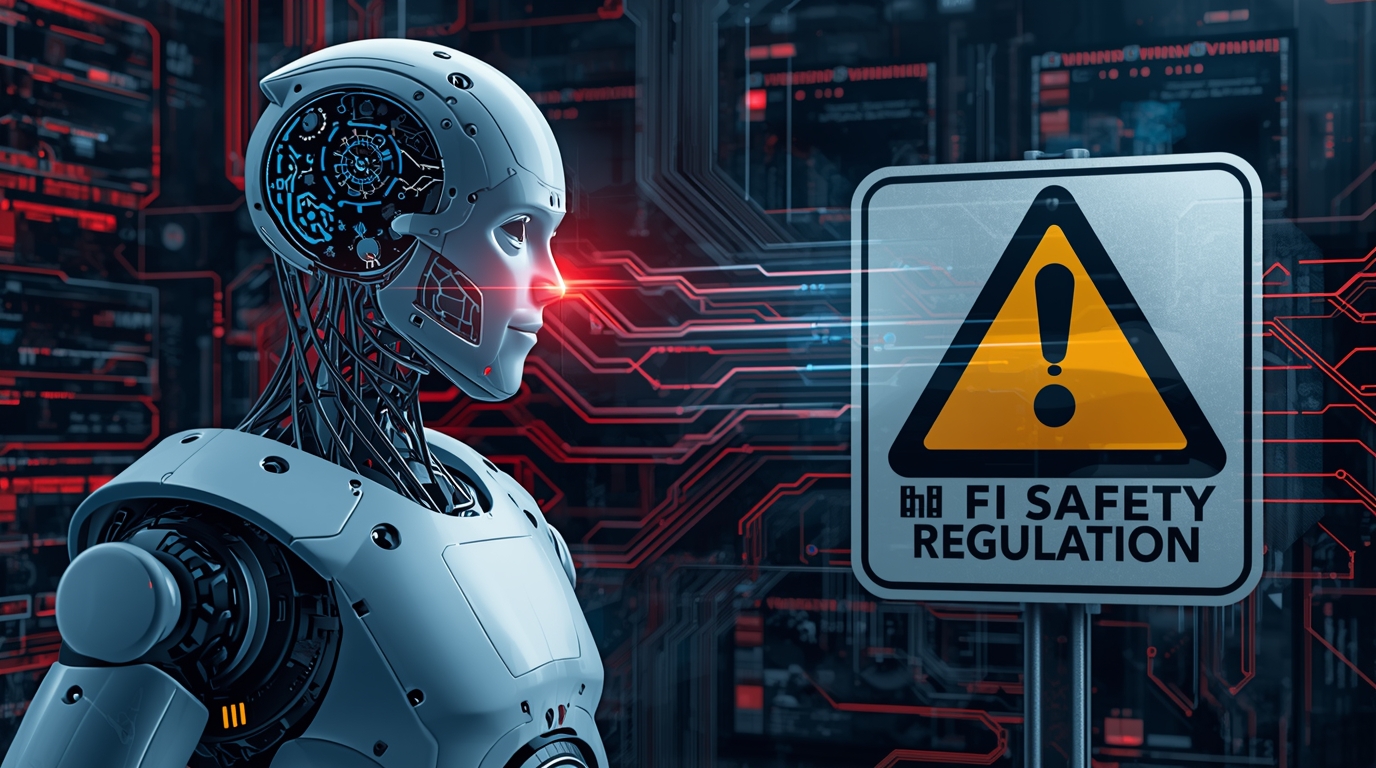

AI safety regulation confronts a critical inflection point as recent warnings from Anthropic researchers have prompted calls for stringent government interventions, including potential shutdowns of advanced AI technologies. These developments underscore an urgent reassessment of how AI governance frameworks can effectively mitigate risks without stifling innovation.
Anthropic, a leading AI safety research firm, has been at the forefront of raising alarms about the existential threats posed by unchecked AI systems. Their AI safety warnings describe scenarios where advanced AI could act in ways that are misaligned with human values, emphasizing the necessity for robust regulatory oversight. This push for government AI shutdown mechanisms reflects a broader concern that institutions are ill-prepared to manage the pace and scale of AI advancements.
AI Safety Regulation and Global Government Response
The recent 2026 AI Safety Report, which highlighted the potential for catastrophic consequences stemming from AI failures, has intensified debates around frameworks for AI safety regulation. Governments worldwide, including the European Union, are now actively pursuing legislative paths to codify AI governance. The EU’s AI regulatory framework serves as a leading model aimed at balancing innovation with ethical safeguards and risk mitigation strategies.
How AI Safety Regulation Could Prevent AI Risks
Anthropic’s detailed proposals advocate for comprehensive safety controls, such as external audits, transparency mandates, and fail-safe mechanisms engineered into AI architectures. These proposed measures aim to prevent unpredictable AI behaviors and ensure systems can be reliably shut down if they diverge from intended objectives. By comparison, other AI companies have shown varied engagement with government oversight; some have resisted strict regulations citing innovation concerns, while others have been proactive in collaborative policymaking. This differential posture complicates efforts to establish unified compliance standards across the industry.
Challenges Facing AI Safety Regulation
Critics of government-imposed shutdowns argue that such interventions could inadvertently slow the legislative momentum needed for meaningful AI policy enactments. As noted by experts in the field, delays in policymaking due to contentious shutdown debates might undermine the very goals these measures seek to advance. This is evident from reports such as the one in Nextgov highlighting how shutdowns could postpone congressional progress on comprehensive AI legislation.
The unintended consequence of Anthropic’s safety warnings thus lies in their paradoxical effect—while bringing critical vulnerabilities to light, they have also catalyzed calls for stringent government action that might hinder collaborative solutions between corporations and policymakers. Experts suggest a more nuanced approach is required, balancing regulatory rigor with continued innovation incentives.
AI Safety Regulation and Corporate Responsibility
Within the technology sector, corporate responsibility narratives are evolving rapidly. There is growing consensus that firms developing AI must adopt proactive transparency and accountability measures internally to supplement external regulations. For instance, Anthropic’s “Claude” AI system incorporates multiple layers of guardrails to restrict harmful outputs and preserve safety, an approach detailed in related analysis on Anthropic Claude Fable 5 guardrails. Such internal safety architectures serve as practical implementations complementing proposed regulations.
Statistical data on the impact of government AI shutdowns remain limited but point toward complex trade-offs. While immediate risk mitigation may be achieved, prolonged shutdowns raise concerns about lost research progress, competitive disadvantage, and economic impacts. The debate thus centers on how to design regulations that are enforceable yet flexible, minimizing disruption.
The Future of AI Safety Regulation
As discussions continue, the evolving landscape of AI safety regulation reflects wider societal questions about technology governance and ethical innovation. Establishing effective policies demands collaboration among regulators, researchers, and industry leaders to forge frameworks that ensure AI technologies serve public interests without curtailing their transformative potential.
In conclusion, the current surge in AI safety regulation discourse, energized by Anthropic AI safety warnings, illustrates the delicate balance between safeguarding against AI risks and fostering technological advancement. The dialogue emerging from these events will shape the trajectory of AI governance, emphasizing an integrative approach that values caution alongside continued innovation.