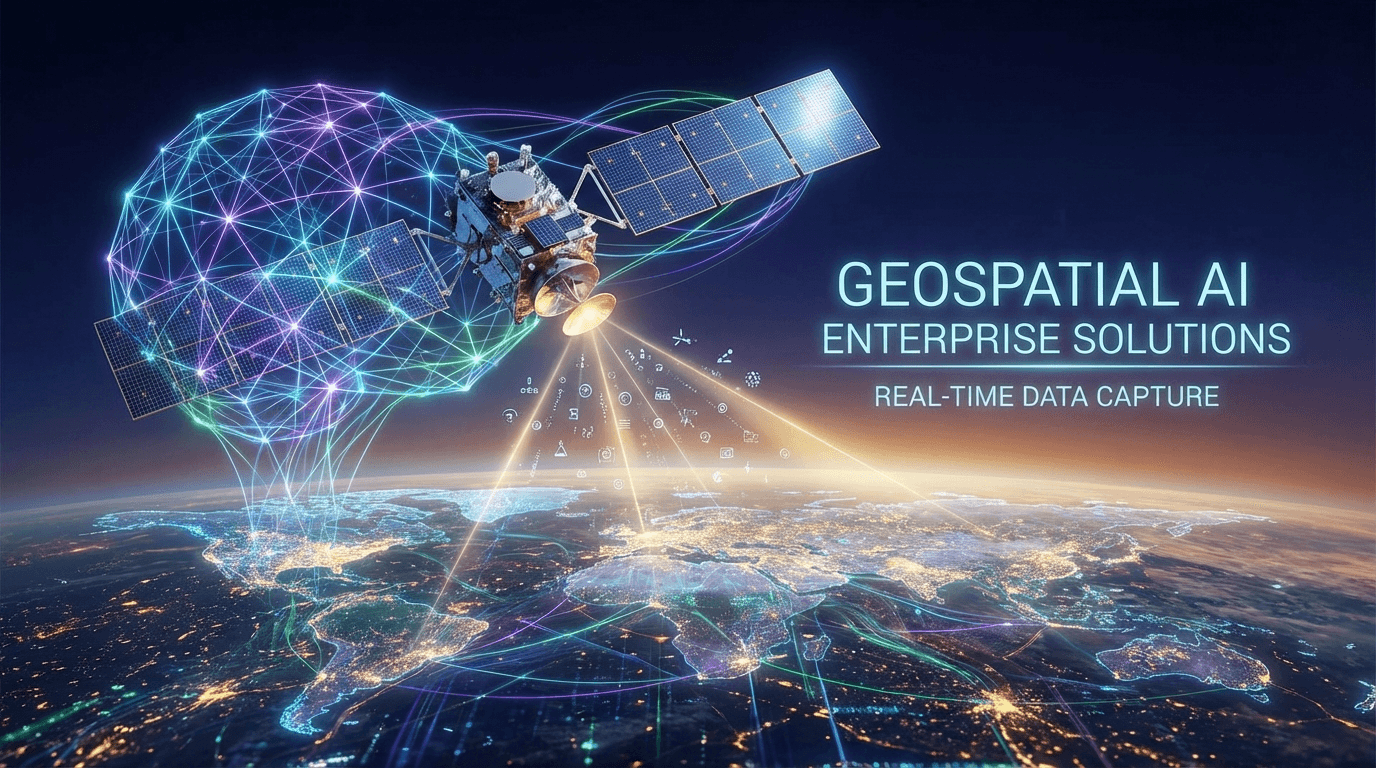
Geospatial AI is transforming how enterprises process and utilize satellite data, dramatically expanding applications across multiple industries. This technology blends artificial intelligence with geographic information systems (GIS) to analyze vast amounts of Earth observation data, creating actionable insights that were previously difficult to extract at scale.
A major milestone in this evolution is marked by recent funding rounds supporting companies that combine AI with satellite and Earth mapping technologies. These investments underscore a growing enterprise demand for precision geospatial intelligence, especially in sectors like agriculture, urban planning, and environmental monitoring. As geospatial AI integrates deeper into enterprise platforms, organizations encounter powerful tools to optimize operations and strategic decisions.
Leveraging Geospatial AI for Enhanced Decision-Making
At its core, geospatial AI merges machine learning with spatial data analysis, enabling automated recognition and prediction of patterns on a planetary scale. According to the Geographic Information System (GIS) industry leader, this capability enhances decision-making by providing detailed insights from complex satellite imagery and location data. Geospatial AI overview from Esri highlights how these technologies enable enterprises to transform raw satellite data into practical applications.
Among the companies driving innovation, some specialize in embedding geospatial datasets directly within enterprise software environments. This approach facilitates seamless integration of AI-driven spatial analytics into day-to-day workflows. For instance, emerging startups use machine learning models trained on satellite data to detect crop health anomalies or monitor infrastructure changes in near real-time, directly benefiting government and commercial clients.
The competitive landscape in geospatial AI is robust, marked by enterprises facing competition from specialized startups and established defense contractors. Although broad-based companies offer general AI solutions, those focusing strictly on geospatial domains tend to dominate niche markets through tailored insights. Expanding on market positioning, companies pursuing strategic partnerships with satellite data providers create layered advantages. For example, collaborations that combine proprietary AI models with high-resolution satellite imagery empower clients to tackle complex challenges such as urban sprawl management and disaster response.
Use cases illustrate the breadth of impact geospatial AI delivers. In agriculture, predictive analytics driven by satellite imagery improve yield forecasting and resource allocation, enhancing food security. Urban planners apply geospatial AI to monitor land use and infrastructure development, ensuring sustainable growth. Environmental agencies leverage these tools to track deforestation rates and monitor climate change effects in near real-time. Such applications demonstrate how enterprises can translate AI-powered mapping into tangible operational value. Satellite data utilization methods from Iceye show practical examples of these implementations.
Despite its rapid advancement, the sector still faces challenges around data privacy, algorithmic transparency, and scalability. Enterprises must balance the need for detailed geospatial insights with ethical and regulatory considerations, especially when deploying AI systems on sensitive geographic data. Addressing these concerns requires ongoing collaboration among technology providers, regulators, and end users.
Further illustrating collaboration’s importance, industry experts emphasize digital transformation needs in the space domain. Integration of multiple data sources and AI platforms is critical for maximizing geospatial AI’s potential. For example, government agencies working with commercial space firms highlight the synergy required to build robust geospatial intelligence ecosystems. SAIC on space collaboration and digital transformation covers these trends extensively.
In market strategy, companies that uniquely position themselves by embedding geospatial AI within established enterprise resource planning (ERP) and business intelligence (BI) tools appear poised for sustained growth. This approach not only streamlines adoption but also aligns AI mapping capabilities with existing corporate data infrastructures, making insights more accessible for operational teams.
To understand how funding trends influence this space, it is useful to examine broad AI private market investment flows. Analysis of startup funding and technology adoption reveals patterns that highlight which geospatial AI companies could emerge as leaders.TechRyza’s extensive analysis on AI private market investment trends offers valuable perspective on current and forecasted movements.
Looking ahead, geospatial AI’s integration into satellite data analytics signals a paradigm shift in how enterprises across Europe, Spain, and beyond approach resource management and policy planning. Continued innovation supported by strategic partnerships and market-savvy positioning will likely redefine the geospatial intelligence sector over the coming years. This evolution presents both opportunity and responsibility for stakeholders to ensure that AI-driven solutions deliver effective and ethical outcomes at scale.