
- NEARLY 30% LEAP IN RESOLUTION — Experience every thrill in breathtaking detail with sharp graphics and stunning 4K Infin…
- NO WIRES, MORE FUN — Break free from cords. Play, explore and exercise in immersive worlds — untethered and without limi…
- 2X GRAPHICAL PROCESSING POWER — Enjoy lightning-fast load times and next-gen graphics for smooth gaming powered by the S…
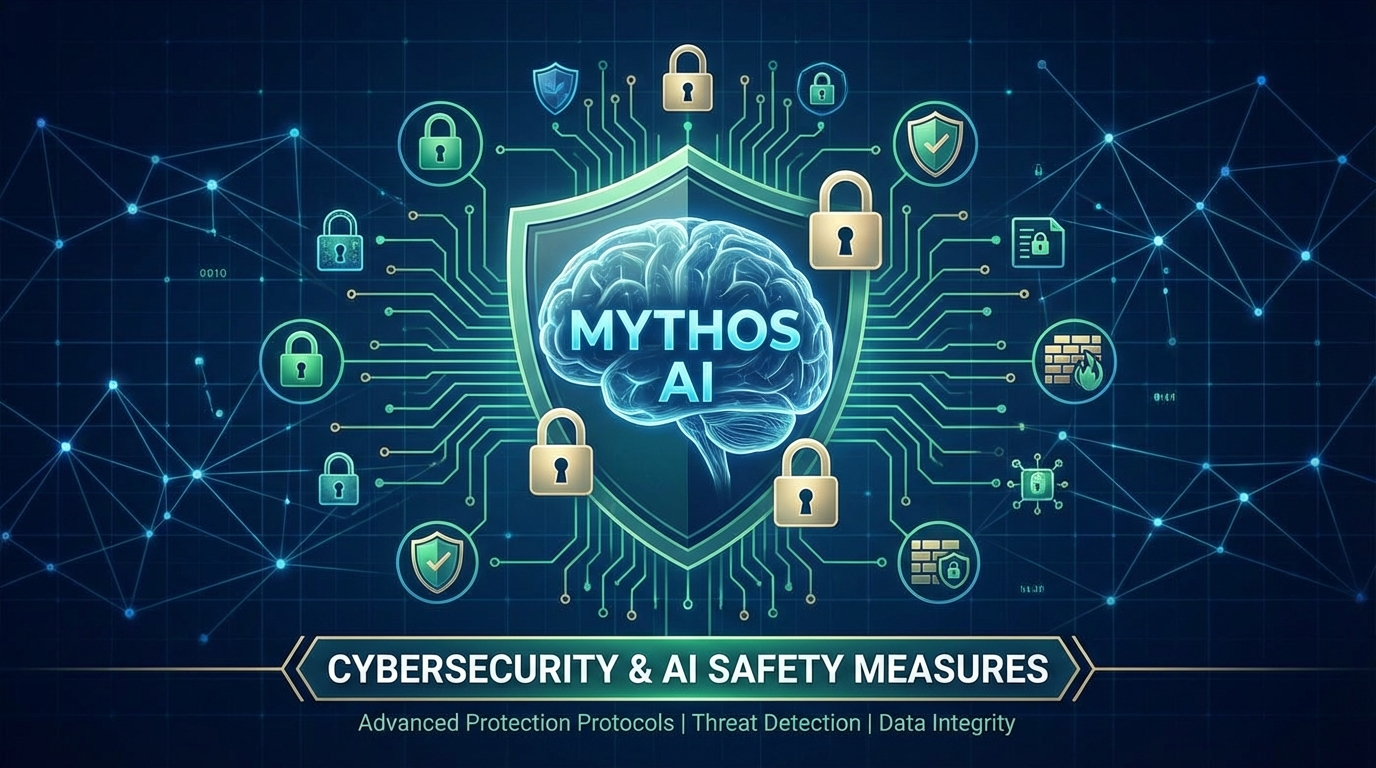
Claude Mythos AI represents a significant stride in cybersecurity safety, emerging as a prime example of how leading-edge artificial intelligence can both empower and challenge secure digital practices. Developed by Anthropic, Claude Mythos AI has drawn attention due to its limited release, a strategic move driven by concerns over its potential misuse and security vulnerabilities.
Claude Mythos AI: How It Strengthens Cybersecurity Safety
Anthropic’s decision to impose tight constraints on the availability of Claude Mythos AI stems from an acute awareness of the risks inherent in deploying powerful AI systems prematurely. The company’s comprehensive risk report lays bare the dual-edged nature of Mythos: an AI capable of identifying critical cybersecurity flaws but also potentially exploitable for malicious purposes. This report outlines the technical challenges and ethical imperatives guiding Anthropic’s cautious approach.
At the core of Claude Mythos AI is its advanced capability to scan complex codebases and detect vulnerabilities that traditional tools might miss. However, the sophistication that allows Mythos to uncover these security gaps also raises the bar for responsible AI deployment. Unlike more freely accessible AI platforms, Mythos has been subjected to stringent access controls, underscoring Anthropic’s commitment to AI safety principles. This reflects a broader industry trend where providers prioritize containment and surveillance over rapid widespread dissemination, responding to ongoing debates about AI risk management.
Critically, Claude Mythos AI blends AI safety with cybersecurity by introducing new paradigms for threat assessment. While competitors such as OpenAI or Google DeepMind emphasize broad AI applications or conversational intelligence, Anthropic’s Mythos targets a niche yet vital sector where AI directly intersects with enterprise security management. This specialization has necessitated innovations in both AI architecture and policy governance, as the system’s performance depends heavily on its ability to navigate complex ethical landscapes and maintain user trust.
Comparatively, Anthropic’s conservative release contrasts with other firms’ more open distribution models, positioning Mythos as a test case for whether limiting AI deployment can effectively contain risks without stifling innovation. Industry analysts note that while safety-focused measures may delay immediate commercial gains, they foster long-term stability and user confidence. As security experts observe, responsible rollout procedures become crucial when AI intersects with software supply chains and critical infrastructure.
The technical underpinnings of Mythos involve advanced natural language processing tuned specifically to cybersecurity threat vectors. It excels in parsing lines of code, identifying anomalous patterns, and suggesting patches, thus enabling enterprises to preempt cyberattacks. Yet the deployment demands rigorous validation protocols to avoid adversarial exploitation, a complex challenge that Anthropic tackles through continuous monitoring and iterative updates.
This ongoing refinement reflects a broader ethical debate around AI release limitations. Stakeholders argue about the trade-offs between transparency and control, innovation speed and safety assurance. Anthropic’s transparent communication about Mythos and its inherent risks contributes to this discourse, allowing industry participants and policymakers to weigh responsible AI use against commercial pressures.
Users stand to benefit from Mythos’s cybersecurity enhancements, particularly large-scale organizations with significant digital estates. The AI’s effectiveness in proactively identifying security flaws can mitigate costly breaches and data leaks, reshaping how companies approach enterprise security. For further context on AI’s evolving role within business and finance, readers can explore investment perspectives covered in this analysis of AI private markets and investment trends, which outlines the economic implications of such innovations.
Anthropic’s approach with Claude Mythos AI underscores the value of balancing innovation with precaution. By constraining access, the company not only guards against immediate misuse but also sets a precedent for industry-wide standards in AI safety—a critical dimension as AI systems gain more autonomous capabilities.
Despite its advantages, Mythos also highlights persistent challenges in AI cybersecurity. Reports have surfaced detailing how the AI exposed critical software security flaws that could be exploited, documented comprehensively by media outlets highlighting these vulnerabilities. Such revelations underscore the imperative for ongoing vigilance and transparency in AI development.
In conclusion, Claude Mythos AI is a pivotal case study in leveraging cutting-edge AI technology within cybersecurity domains while imposing stringent safety controls to manage associated risks. Its development and release strategy illuminate the complexities of responsible AI deployment, setting a benchmark for future efforts to harmonize innovation with ethical and practical safeguards.

- AN AMAZING MAC AT A SURPRISING PRICE — With an incredibly portable and durable aluminum design, up to 16 hours of batter…
- FOUR STUNNING COLORS. ONE DURABLE DESIGN — Choose from four beautiful colors — Silver, Blush, Citrus, or Indigo — each w…
- FLY THROUGH EVERYDAY ASSIGNMENTS — Whether you’re cramming for finals, using Apple Intelligence* to summarize class note…